My brother Jack has been fighting mental illness for almost ten years. Schizophrenia. Bipolar disorder. Excited catatonia. Psychosis. The diagnoses stacked up over years of hospitals, psychiatric wards, and more therapists than I can count.
When he's properly diagnosed and medicated, he's the same brother I grew up with, just with a few battle scars. When he's not, he can be unrecognizable.
My mother became his primary advocate almost overnight. She learned to read him better than any doctor could. She could see the episodes coming before they arrived. But when the appointment finally came, with half an hour to cover everything since the last one, she didn't know how to say any of it. She had years of observations and nowhere to put them.
When I left for college, she was doing it alone. That bothered me more than I let on.
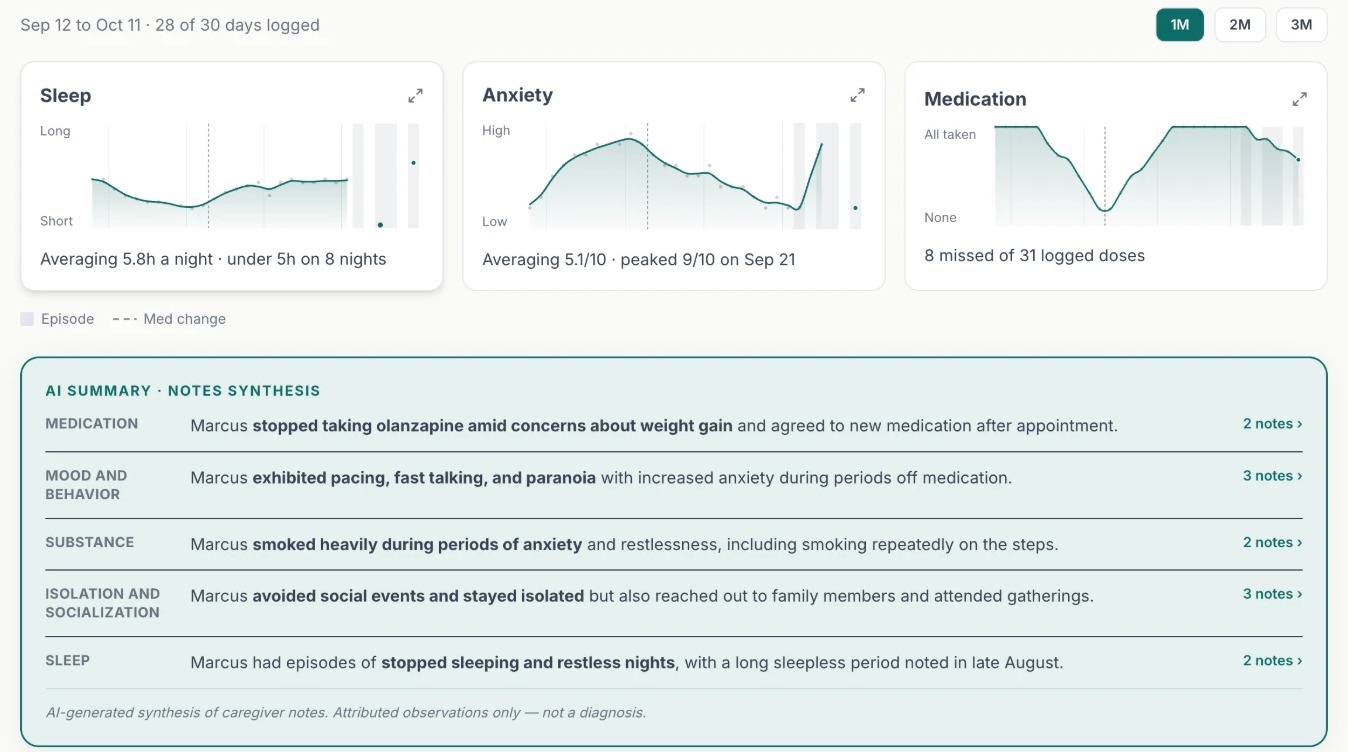
So I built Advocate for her: a simple way to log what she sees every day and turn it into something a doctor could actually use. Then she started finding the patterns herself. She walked into appointments with confidence and caught more episodes before they escalated.
She stopped feeling like a bystander in her own son's care.